
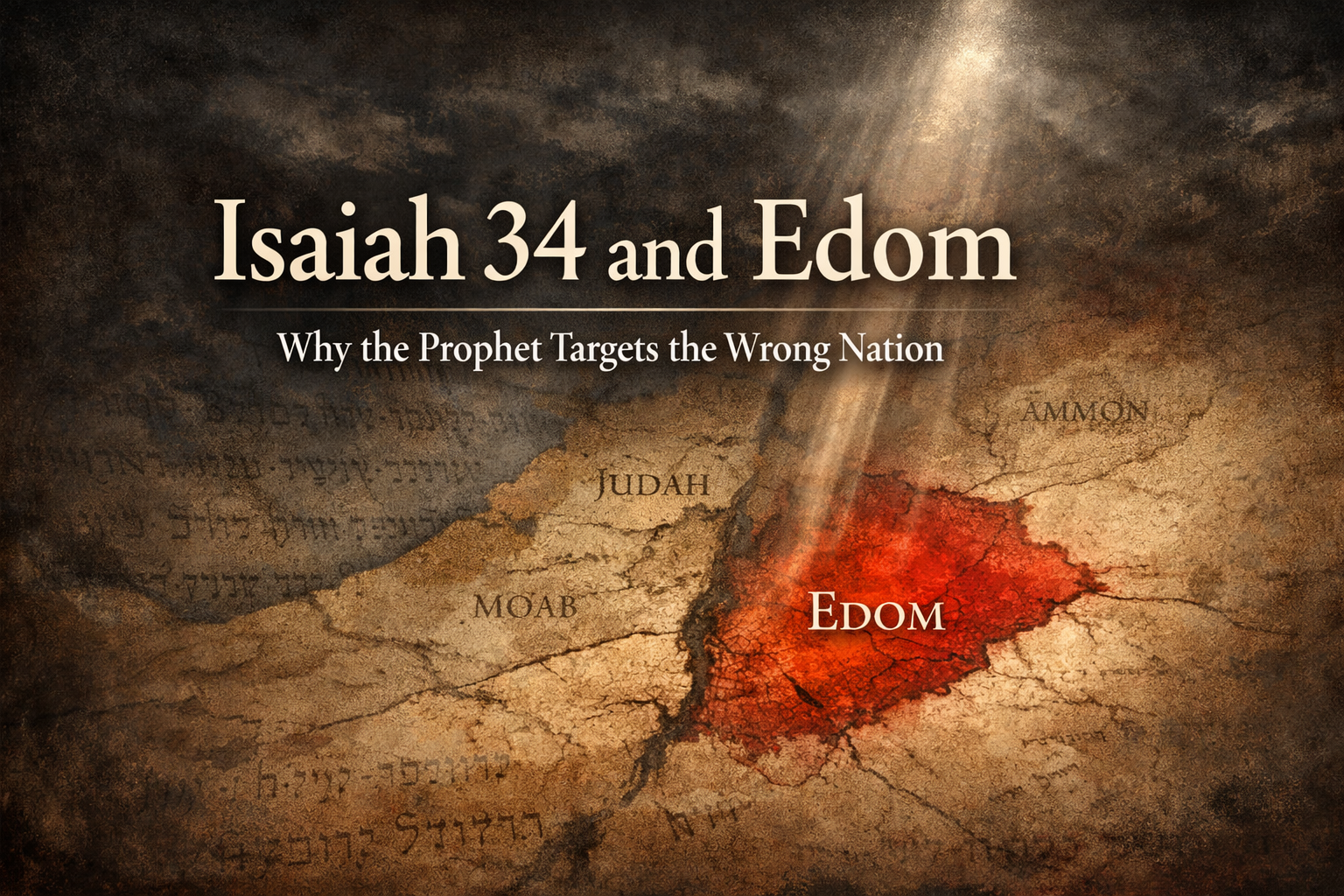
You’re reading Isaiah 34, the Assyrians are camped outside Jerusalem, and suddenly Isaiah launches into a cosmic tirade against Edom. That’s like watching a detective drama where the main suspect vanishes and we spend an entire episode on someone from a completely different postcode.
What’s going on?
The answer is one of the most brilliant features of Hebrew prophecy—and once you see it, you’ll spot it everywhere in Scripture.
ISAIAH 34: ESTABLISHING A PATTERN, NOT REPORTING HISTORY
Here’s the crucial point that changes everything: Isaiah is writing around 701 BC during the Assyrian crisis. He’s not looking back at Edom’s betrayal—that won’t happen for another century (587 BC, when Edom cheers as Babylon destroys Jerusalem). He’s looking forward, establishing a theological category that will help God’s people recognise the same deadly choice in every generation.
Think of it like a parent warning a teenager: “Don’t be the person who trades their inheritance for instant gratification.” The parent isn’t reporting that it’s already happened—they’re establishing the cautionary tale so you’ll recognise the pattern when you face it.
Isaiah is teaching his readers—both his contemporaries in 701 BC and future readers centuries later—to recognise the “Edom choice” whenever it appears.
THE EDOM STORY EVERYONE KNEW
By Isaiah’s day, everyone knew Edom’s founding story. It begins with twin brothers: Jacob and Esau.
Esau was the older twin—which meant he should have inherited the family blessing and God’s covenant promises to Abraham. But one day, Esau came home absolutely starving from hunting. Jacob was cooking lentil stew.
“Let me have some of that red stuff!” Esau demanded.
Jacob saw his chance: “Sell me your birthright first.”
And here’s the shocking part—Esau said yes. The Bible says “Esau despised his birthright” (Genesis 25:34 – NIV UK). He traded God’s covenant promises—his eternal inheritance—for a bowl of soup he could eat right now.
That’s the pattern: choose immediate satisfaction over lasting promises. Pick what you can see and taste today over what God promises for tomorrow.
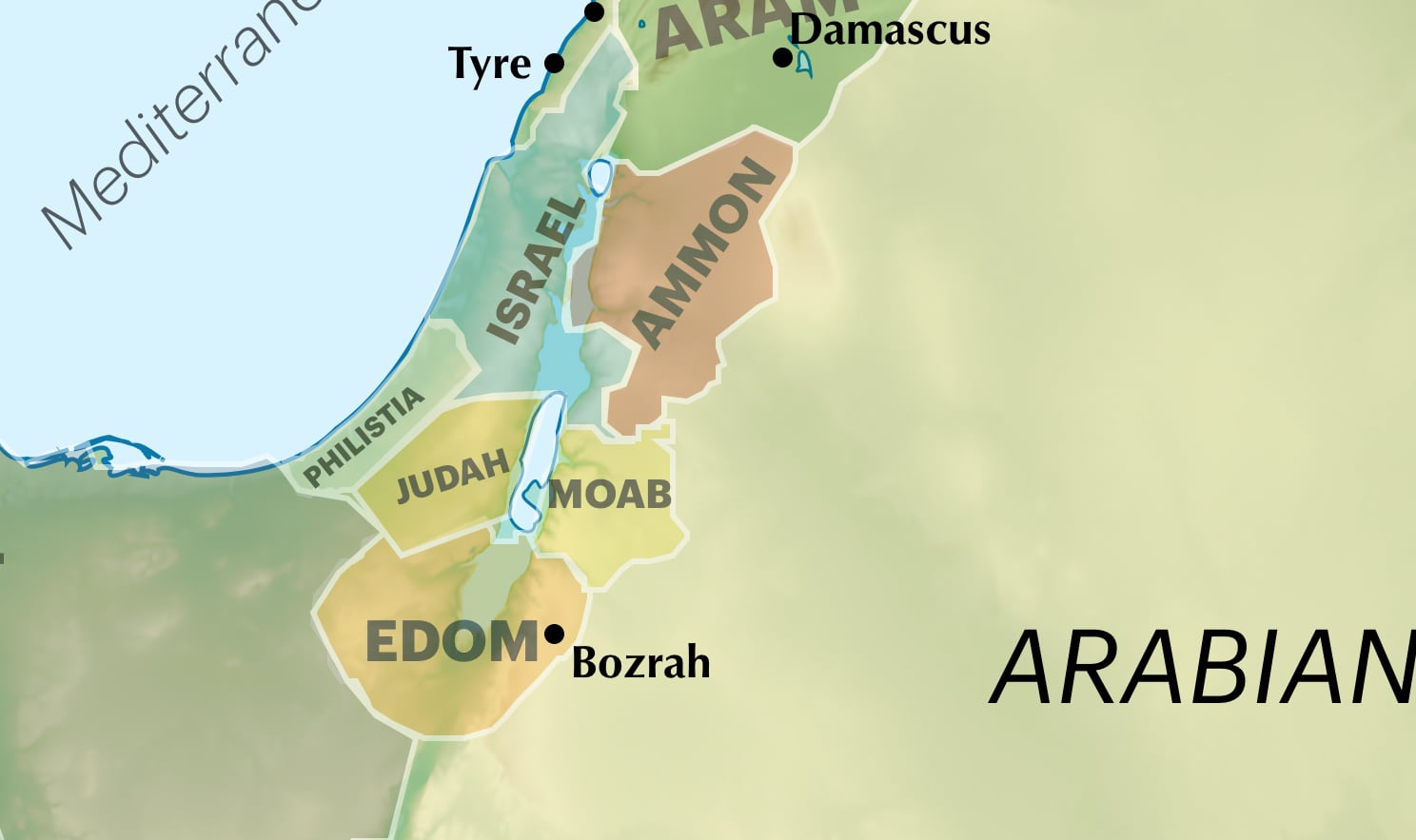
Esau’s descendants became the nation of Edom. The name even connects to that red stew—”Edom” (אֱדוֹם) means “red.” And since Edom and Israel (Jacob’s descendants) share the same grandfather Abraham, they’re brother nations. Family who should have been allies but chose to become enemies.
THE HEBREW WORDPLAY THAT UNLOCKS ISAIAH 34
Stay with me—this is worth knowing.
Hebrew creates an intentional connection between three words:
- Edom (אֱדוֹם) = “red”
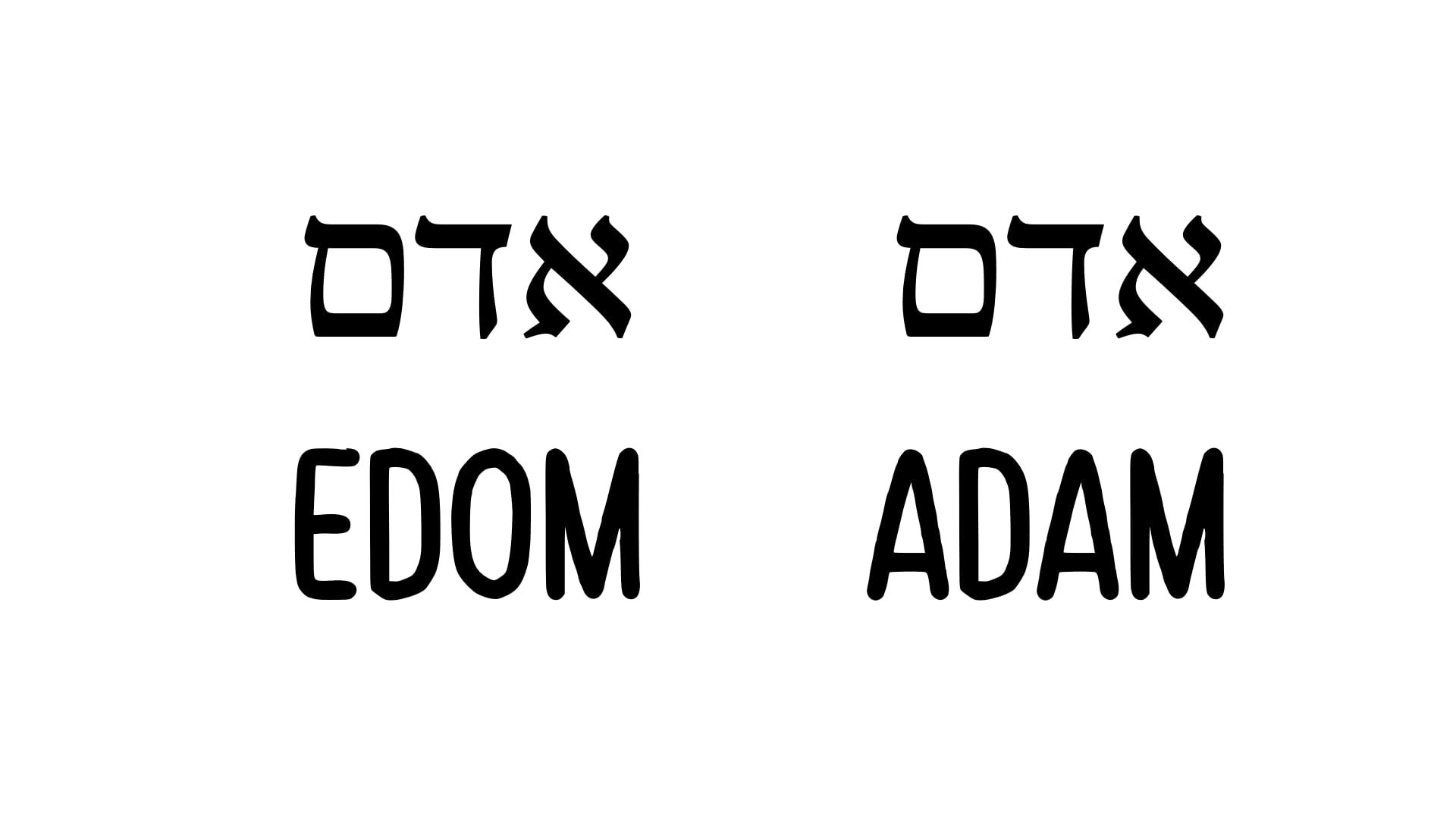
- Adam (אָדָם) = “man/humanity”
- Adamah (אֲדָמָה) = “red earth/ground”
All these words share the same root letters. So “Edom” sounds like “Adam”—humanity itself. Edom becomes representative of the whole human race: “red humanity,” marked by choosing rebellion, bloodshed, and immediate gratification over covenant trust.
When judgement falls on Edom in Isaiah 34, it falls on the human condition itself.
WHY EDOM AND NOT ASSYRIA?
Fair question. If Assyria is the immediate threat in 701 BC, why doesn’t Isaiah talk about Assyria’s judgement?
Because Isaiah wants his readers to see beyond the immediate crisis to the permanent pattern.
If he only talked about Assyria, future readers might think: “Well, that was relevant in 701 BC, but what about our crisis?” By using Edom—the archetypal chooser of immediate gratification over covenant trust—Isaiah creates a category that works for every generation.
When Babylon comes later (587 BC), readers will recognise: “Ah, they’re making the Edom choice.” When any proud empire rises up, readers can spot it: “There’s the Edom pattern again.”
The pattern of despising covenant birthright for immediate gratification will repeat throughout redemptive history, and Isaiah’s readers must learn to recognise it.
THE BABYLON CONNECTION IN ISAIAH 34
If you look carefully at Isaiah 34, you’ll notice something fascinating: it echoes Isaiah 13–14 (the oracle against “Babylon”). Both passages feature the same creatures inhabiting ruins—צִיִּים (tsiyyim, desert creatures), אִיִּים (iyyim, jackals), שְׂעִירִים (se’irim, wild goats)—and the same descriptions of once-glorious architecture reduced to animal dens.
This isn’t coincidental. Isaiah is showing that the same pattern applies universally. What Babylon faces archetypally in chapter 13, Edom faces historically in chapter 34, and every proud power will ultimately face eschatologically. All human pride—whether expressed in empire-building, military might, or covenant-despising—leads to the same catastrophic reversal.
Isaiah’s literary technique reveals his theological conviction: every form of human self-exaltation follows the same trajectory toward decreation.
COSMIC STAKES: DECREATION IN ISAIAH 34
The wild imagery in Isaiah 34—stars falling, heavens rolling up like a scroll, creation unravelling—isn’t about literal astronomy. It’s Hebrew poetry at “white hot intensity,” revealing that the Edom choice has cosmic consequences.
“God will stretch out over Edom the measuring line of chaos and the plumb line of desolation” (Isaiah 34:11 – NIV UK)
The Hebrew phrase “measuring line of chaos” (קַו־תֹּהוּ) and “plumb line of desolation” directly echoes Genesis 1:2‘s “formless and empty” (תֹּהוּ וָבֹהוּ). God is unmeasuring what He once measured, unmaking what He once made. The tools of creation become instruments of decreation.
When you trade covenant promises for immediate gratification, you’re not making a minor mistake. You’re choosing decreation over creation, death over life, chaos over order.
THE COVENANT LAWSUIT REACHES VERDICT
Remember Deuteronomy 32? Moses called heaven and earth as witnesses to God’s covenant with Israel, and that same lawsuit framework runs through Isaiah.
Isaiah 34:1 summons the witnesses again: “Come near, you nations, and listen!”
Verse 8 provides the theological key:
“For the LORD has a day of vengeance, a year of retribution, to uphold Zion’s cause” (Isaiah 34:8 – NIV UK)
This directly echoes Deuteronomy 32:35: “It is mine to avenge; I will repay.” The day of vengeance isn’t arbitrary divine wrath but covenant faithfulness—God vindicating His people and His promises.
The verdict? Everyone making the Edom choice—choosing pride over trust—faces the same judgement. Not because God is randomly angry, but because rejecting the Creator inevitably leads to decreation.
BUT ISAIAH 34 ISN’T THE END
Here’s the brilliant part: chapter 34’s devastating judgement isn’t the final word.
Chapter 35 immediately shows the opposite—wilderness blooming, blind seeing, lame leaping, prisoners freed, joy replacing sorrow. God’s judgement on the Edom choice makes space for new creation. Those who stop trading their birthright for soup get to walk the highway home (35:8–10).
The literary structure mirrors creation and decreation, then re-creation:
- Genesis 1: Chaos to order
- Genesis 3: Order disrupted by rebellion
- Isaiah 34: Order collapses under judgement
- Isaiah 35: New order emerges through grace
Judgement on pride makes space for blind eyes opening, deaf ears hearing, lame people leaping, desert blooming like Eden, and everlasting joy replacing sorrow.
SPOTTING THE EDOM PATTERN TODAY
Once Isaiah establishes this pattern in chapter 34, his readers can spot it everywhere—including in their own hearts. Here’s what it looks like:
- Close to covenant promises but rejecting them
- Choosing visible security over invisible faith
- Trading eternal blessing for immediate gratification
- Trusting in self rather than God
- Becoming enemies of God’s people despite family connections
Every time someone says “I know what God says, but I want this now“—that’s Esau’s trade, the Edom choice.
THE BOTTOM LINE ON ISAIAH 34 AND EDOM
When Isaiah talks about Edom in chapter 34 (writing around 701 BC), he’s not randomly targeting one nation or reporting historical betrayal. He’s doing something far more brilliant: establishing a permanent pattern so every future generation can recognise the choice.
Will you trade covenant promises for immediate gratification (Esau’s choice)? Or trust God’s promises even when they seem invisible (Jacob’s choice)?
The Edom pattern helps you spot this choice in nations and empires, in your community, and in your own heart. And Isaiah’s message is clear: choose the blessing, not the soup. Choose covenant faithfulness, not immediate security. Choose life, not death.
That’s a choice that matters just as much today as it did in 701 BC—which is exactly why Isaiah used Edom as his example.
This post is part of an ongoing series on the book of Isaiah. For more on how Isaiah structures his prophecy around the 701 BC crisis, see our introduction to Isaiah.